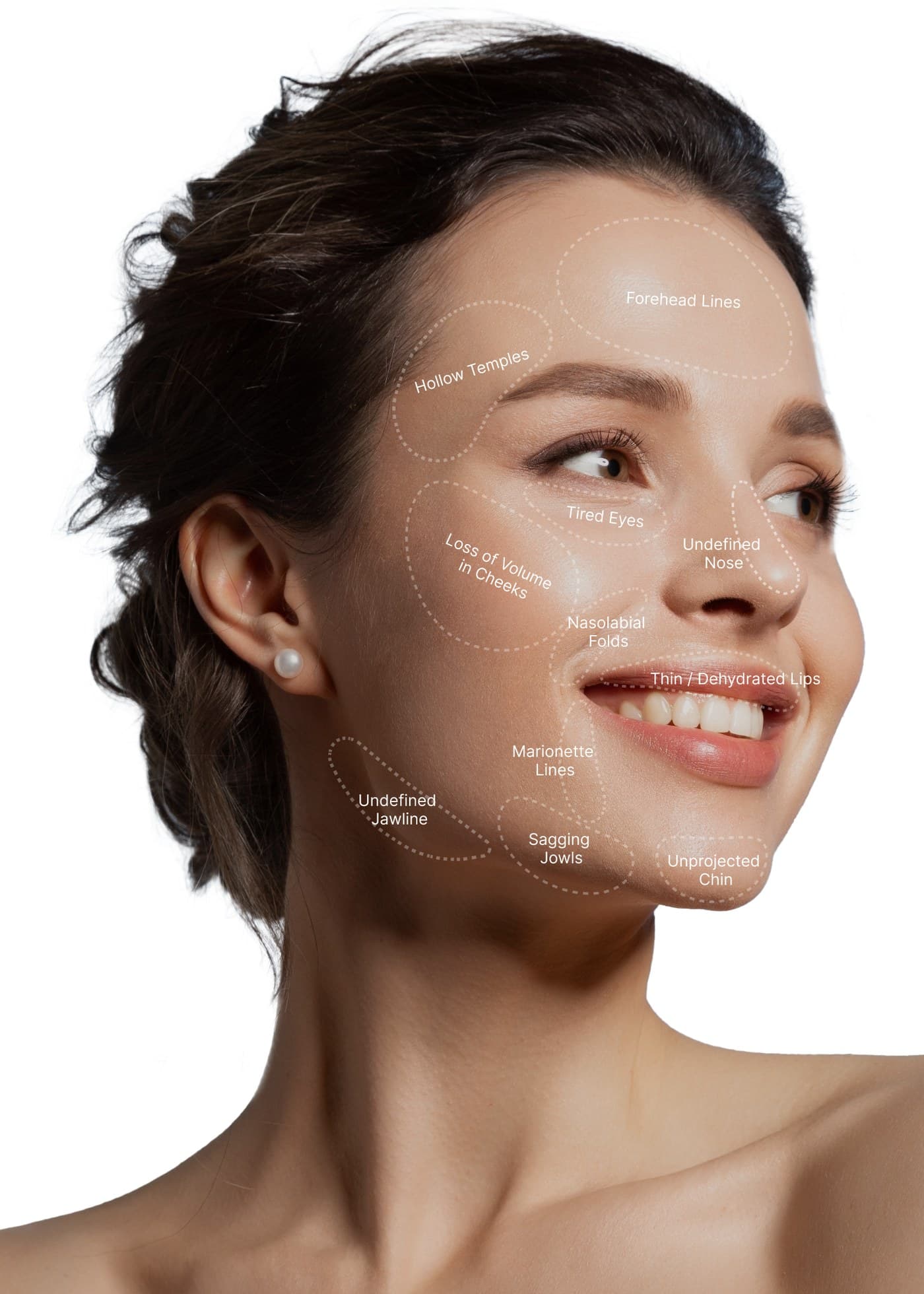
Hollowing at the temples narrows the upper face and is one of the most commonly missed changes, because patients rarely look there.


The temples sit at the widest point of the upper face. As volume is lost there, the face narrows at the top, the brow can appear to drop, and the outer edge of the eye socket becomes more visible. The overall impression is of a face that has become more angular and more tired, without any single feature looking different.
Temple filler restores that width. It is a small treatment with a disproportionate effect on how balanced a face looks, and it is among the most commonly overlooked, because almost nobody arrives asking about their temples.
At Dr Ellie Sateei’s London clinic it is most often identified during a whole-face assessment rather than requested. Results vary between individuals.
The temple is anatomically busy, with significant vessels running through it, so technique here is a safety matter rather than only an aesthetic one. Product is placed at a specific depth in small volumes, using a cannula where appropriate, and the choice of entry point and plane is deliberate.
A firmer product is generally used, as the job is structural. Because the temple sits at the top of the facial framework, restoring it often improves how the midface and brow read, which is why it is usually planned as part of a whole-face sequence rather than treated on its own.
Temple filler may suit you if you are looking to:
It is not usually the right first treatment if the changes you have noticed are concentrated in the lower face, and it is not appropriate where naturally narrow temples are simply your facial structure rather than a change. Dr Sateei will say so.
As an injectable treatment, it is not recommended during pregnancy or breastfeeding. Given the vascular anatomy of the area, your full medical history and any previous temple treatment will be discussed.

Treatment takes around 30 minutes. Numbing cream is applied, and a cannula is used where appropriate to reduce bruising. Most patients return to normal activities immediately.
Mild swelling or bruising can occur and typically settles within a few days. The result reads close to final within a week.
Temple filler generally lasts twelve to eighteen months. Because it is often part of a wider plan, Dr Sateei reviews the whole face rather than the temple alone when considering repeat treatment.
| Treatment | London | Sevenoaks |
|---|---|---|
| Temple fillers | From £595 | From £595 |
| Cheek filler | From £550 | From £495 |
| Full face rejuvenation | From £1885 | From £1885 |
New patient consultation, £195 at both clinics. If you go ahead with treatment on the day of your appointment, this fee is deducted from the cost of your treatment.Prices correct as published and subject to change.
“Nobody comes to me about their temples. They come about their eyes looking tired, or their face looking narrower than it used to, and the temples are frequently what is causing it. It is a small amount of product in an area that needs real care anatomically, and the effect on how balanced a face looks is out of all proportion to the size of the treatment.”
Dr Ellie Sateei has over two decades of experience in dermatology and aesthetics.
From £595 in London. Your consultation is £195, deducted from the cost of treatment if you go ahead on the day.
Volume loss at the temples narrows the upper face, can make the brow appear lower and makes the eye socket more visible. Most patients notice the effect without identifying the cause.
The temple contains significant vessels, so technique matters more here than in most areas. Small volumes, a specific depth and cannula use where appropriate are how that risk is managed, following a full medical history.
Generally twelve to eighteen months.
Most patients return to normal activities immediately. Mild swelling or bruising can occur and typically settles within a few days.
It can support the brow where volume beneath it has been lost, though it does not lift the brow in the way muscle treatment does.
Temple fillers are often planned alongside these.

Temple hollowing narrows the upper face and is rarely the thing patients arrive asking about. If your face looks narrower or more tired without any one feature having changed, the most useful next step is a whole-face assessment with Dr Ellie Sateei at her London clinic.
Our London clinic is located at 91a New Cavendish Street, London, W1W 6XF
We serve patients from London, Kent and the home counties as well as from all over the world. Our London clinic sits in the heart of Marylebone, within easy reach of the West End by tube, while our Sevenoaks clinic in Ightham is moments from the M25 and M26 for patients across Kent.