
Age spots, sometimes called sun spots or lentigines, are flat brown or tan marks that appear on the areas with the most lifetime sun exposure.
Age spots, sometimes called sun spots or lentigines, are flat, brown or tan marks appearing on areas with the most lifetime sun exposure. They are extremely common from the mid-forties onwards and almost always harmless. Any new or changing mark should always be checked by a GP or dermatologist first.
Age spots result from overproduction of melanin in response to cumulative UV exposure. Ageing, genetics and hormonal changes around menopause all increase susceptibility, and unprotected sun exposure remains the biggest contributing cause.
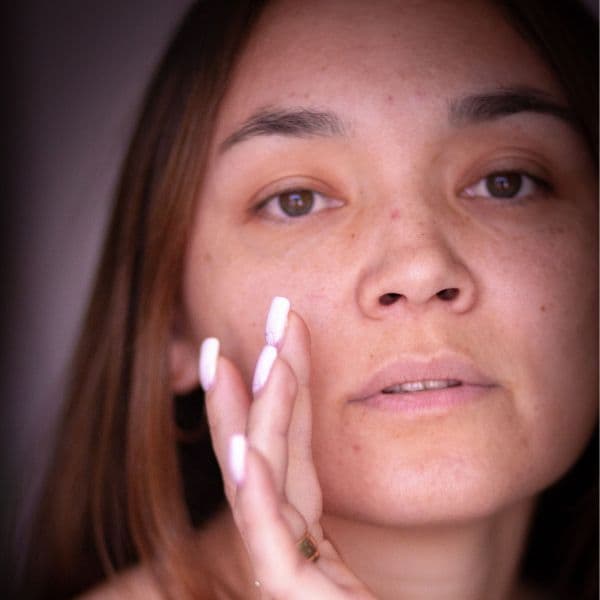
Flat, well-defined patches from light tan to dark brown, most commonly on hands, face, shoulders and upper back. They do not itch or raise, and often appear in clusters.
A personalised medical-grade skincare programme using Obagi Medical and Skinbetter Science, combined with daily SPF, is usually the most meaningful step. The Signature Skin Renewal Facial supports clarity and radiance with no expected downtime while skin boosters and polynucleotides support overall skin health. Improvement with a skincare-led approach tends to be gradual, and Dr Sateei will set clear, realistic expectations for your particular skin during consultation.

With over two decades of experience, Dr Sateei takes an honest view of what skincare and in-clinic treatment can realistically achieve, tailoring every programme to your skin type and lifestyle, at both her London (near Harley Street) and Sevenoaks clinics.

Cumulative sun exposure triggering melanin overproduction; ageing, genetics and hormones increase susceptibility.
Daily SPF, avoiding sunbeds and limiting unprotected exposure are the most effective steps.
A personalised skincare routine with consistent sun protection; the Skin Renewal Facial can support this, though more stubborn pigmentation may simply take longer to respond.
Gradual, over several months of consistent use.
No, skincare and facials are non-invasive.
None expected.
Yes, any new or changing mark should be checked before cosmetic treatment.
Most adults with confirmed, harmless pigmentation.
Yes, with continued sun exposure, hence ongoing SPF use.
No, it’s an extremely common, natural response to sun exposure.
Brands and Treatments to help with age spots.


If age spots have been bothering you, Dr Ellie Sateei welcomes a personal consultation at her London or Sevenoaks clinic.
Our London clinic is located at 91a New Cavendish Street, London, W1W 6XF
We serve patients from London, Kent and the home counties as well as from all over the world. Our London clinic sits in the heart of Marylebone, within easy reach of the West End by tube, while our Sevenoaks clinic in Ightham is moments from the M25 and M26 for patients across Kent.