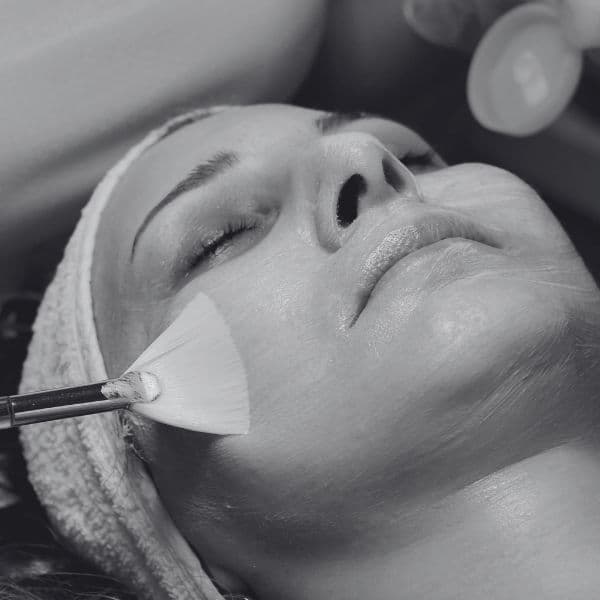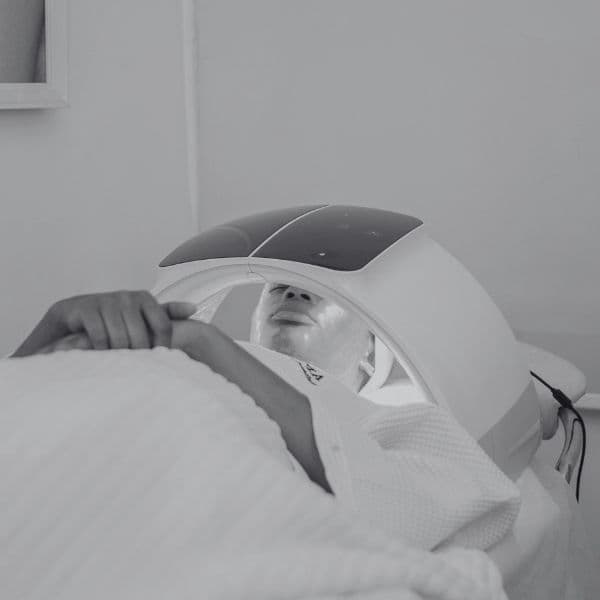
A skincare routine prescribed around your skin rather than bought from a shelf, using medical-grade and prescription-strength formulations that need clinical oversight.


Skincare is the least glamorous part of aesthetic medicine and, in Dr Sateei’s view, the part that does the most work. No injectable treatment improves the quality of the skin it is placed beneath, and no clinical procedure holds its result without a routine supporting it. The patients whose skin holds its condition over years are almost always the ones who got the basics right.
Medical-grade skincare differs from retail skincare in the concentration of its active ingredients and the evidence behind them, which is why some of it requires assessment before use and some requires a prescription. At Dr Ellie Sateei’s London and Sevenoaks clinics, a skincare plan is prescribed around your skin, your concerns and what you will realistically maintain, rather than sold as a set. Results vary between individuals and build over months.

The difference between medical-grade and retail skincare comes down to three things: the concentration of the active ingredient, whether it is formulated to reach the depth where it acts, and whether there is clinical evidence that it does what it claims.
Retinoids are the clearest example. Over-the-counter retinol needs conversion within the skin before it becomes active, which limits both its strength and its speed. Prescription tretinoin is already in its active form, which makes it considerably more effective and considerably more likely to cause irritation if introduced badly. It is a prescription-only medicine for exactly that reason. The same logic applies to prescription-strength pigment inhibitors, which may produce results retail products cannot approach but which need monitoring, defined treatment periods and a clinician who will review your skin.
Vitamin C, niacinamide, alpha and beta hydroxy acids and peptides all work through better-established mechanisms than most marketing suggests, and all are dose and formulation dependent. Broad-spectrum sunscreen sits underneath everything. It is not an optional final step but the single most evidence-backed intervention available, and it protects the results of every other treatment.
Dr Sateei’s approach is to introduce actives in sequence rather than all at once, because the most common reason a routine fails is that too much was started too quickly, the skin became irritated, and the patient abandoned all of it.

A skincare plan may suit you if you are looking to:
It is worth saying plainly that skincare has limits. It will not lift structural descent, restore lost volume or remove established textural scarring. Where those are your concerns, Dr Sateei will tell you which treatment addresses them and where skincare simply supports the result.
Prescription products are not suitable during pregnancy or breastfeeding. Tretinoin in particular is contraindicated, and Dr Sateei will adjust any existing routine if you are pregnant, planning pregnancy or breastfeeding.

A skincare consultation includes a clinical assessment of your skin’s condition, barrier function, sensitivity and concerns, a review of everything you currently use, and a written plan setting out what to apply, when and in what order. Where prescription products are appropriate, these are prescribed following that face-to-face assessment, as the law requires.
Timescales are longer than patients expect and worth stating clearly. Hydration and barrier improvements can show within two to four weeks. Texture and clarity typically take eight to twelve weeks. Pigmentation is the slowest, often three to six months of consistent use, and prone to returning without daily sun protection.
Retinoids commonly cause an adjustment period of dryness, flaking or mild irritation in the first four to six weeks, which is expected rather than a sign of failure, and is precisely why the introduction should be supervised.
A review appointment is recommended at around eight to twelve weeks to assess response and adjust. Skincare is not a one-off prescription.
“Skincare is where I have the least glamorous conversations and see the biggest long-term difference. Most patients arrive using eight products and needing four, and half of what they own is working against the other half. My job is to strip it back, introduce the things that actually have evidence behind them slowly enough that your skin tolerates them, and then review it. It isn’t exciting, but the patients who look well in ten years are the ones who got this part right.”
Dr Ellie Sateei has over two decades of experience in dermatology and aesthetics.
Concentration of active ingredients, formulation designed to reach the depth where they act, and clinical evidence behind the claims. Some medical-grade products require assessment before use, and some require a prescription.
Prescription products require a face-to-face consultation, as the law requires. The consultation fee is £195, deducted from treatment on the day, and it is also the only way to build a routine around your skin rather than guessing.
Hydration and barrier improvements can show in two to four weeks. Texture and clarity typically take eight to twelve weeks. Pigmentation is slowest, often three to six months.
An adjustment period of dryness, flaking or mild irritation in the first four to six weeks is common and expected. Introducing it gradually and at the right strength keeps this manageable, which is why supervision helps.
No. Tretinoin is contraindicated in pregnancy. Please tell Dr Sateei if you are pregnant, planning pregnancy or breastfeeding so your routine can be adjusted.
For pigmentation, tone and skin quality it does a great deal. It will not lift structural descent, restore lost volume or remove established scarring. Dr Sateei will be clear about which is which.
Skincare is often planned alongside these.
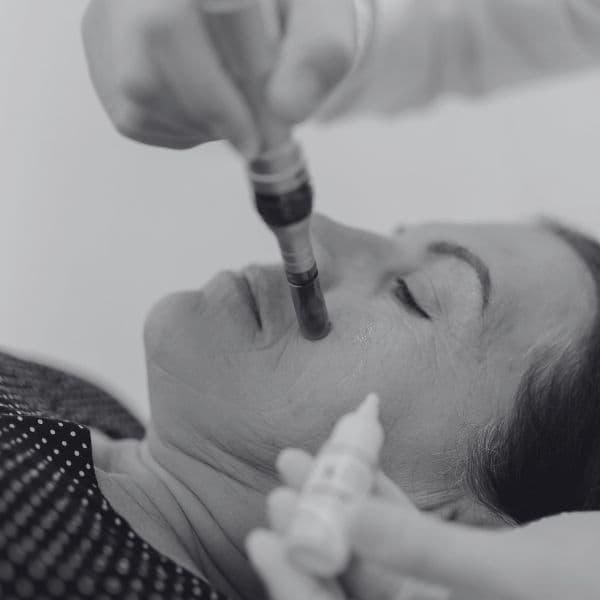
A prescribed skincare plan protects the results of every other treatment and does more for pigment and tone than any injectable. If your routine has grown without ever being assessed, this is usually the most cost-effective appointment you can book, and the plan that comes out of it is often smaller than the one you arrived with. Dr Ellie Sateei sees patients at her London.
Our London clinic is located at 91a New Cavendish Street, London, W1W 6XF
We serve patients from London, Kent and the home counties as well as from all over the world. Our London clinic sits in the heart of Marylebone, within easy reach of the West End by tube, while our Sevenoaks clinic in Ightham is moments from the M25 and M26 for patients across Kent.