
A plan rather than a product. Boosters and polynucleotides selected and sequenced for your skin, because no single branded treatment answers every skin quality concern.


Most skin quality treatments are sold as a product. You book Profhilo, or you book polynucleotides, and the product decides what your skin gets.
The Signature Skin Booster Protocol reverses that order. Your skin is assessed first, and the products and their sequence are chosen afterwards. It is not a branded treatment and it is not a fixed package. It is a plan, built at consultation, that may combine hydrating boosters, a product that spreads more widely for mild laxity, and polynucleotides where the skin is thin and fragile rather than simply dry.
The reason for working this way is straightforward. These products do genuinely different things, most patients present with more than one thing going on, and choosing a single product means choosing which of your concerns to leave untreated. At Dr Ellie Sateei’s London and Sevenoaks clinics the plan is built around what the skin needs across a course. Results vary between individuals.
Three families of injectable work on skin quality, and they are not substitutes for one another.
Hydrating boosters place hyaluronic acid, often with glycerol or supporting nutrients, through the skin itself. They hold water, which improves hydration, suppleness and the way light falls on the surface, and over the following weeks they support the skin’s own collagen and elastin production. Belotero Revive and Teoxane Redensity 1 sit here, and they stay close to where they are placed, which suits fine texture and precise areas.
Widely spreading boosters behave differently. Profhilo is placed at a small number of set points and disperses across a broader area, which is why it is used where mild laxity across a region rather than fine texture is the concern.
Polynucleotides are not hyaluronic acid at all. They are fragments of purified DNA that hold water, support microcirculation and signal to fibroblasts, which makes them the appropriate choice where the skin is thin, fragile or crepey rather than dehydrated. The under-eye is the clearest example, where a hydrating booster is often not the right tool.
A protocol is built by deciding which of these your skin needs, in what order, and over how many sessions. Sequence matters as much as selection: hydration is generally established before the products working on structure and resilience, and the interval between sessions is set by how long each product takes to do its work rather than by what is convenient to book.
It is also built to be smaller than the menu rather than larger. A combination exists to cover what one product would miss, not to add products because they are available, and a protocol that includes everything is a sales decision rather than a clinical one.

It may suit you if:
It is not the right route where the dominant concern is lost volume or structural descent, because no booster lifts or adds shape. It is not the right route for established pigmentation, which is a skincare and peel question. And it is not the right route if a single well-chosen product would do the job, which is frequently the case and which Dr Sateei will say rather than sell you a protocol.
As injectable treatments, these are not recommended during pregnancy or breastfeeding. A fish allergy must be disclosed, because polynucleotides used at the clinic are derived from salmon.

Your consultation includes a clinical assessment of the skin and a plan setting out which products are recommended, in what order and across how many sessions. A typical protocol runs to two or three sessions spaced a few weeks apart, and some skin needs more.
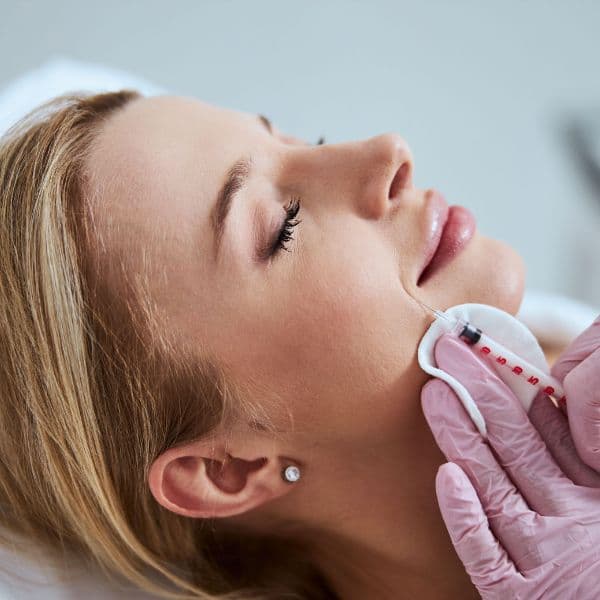
Each session uses a series of fine microinjections. Numbing cream is applied and a cannula is used in delicate areas such as the under-eye wherever possible. A session takes around 30 to 45 minutes including numbing.
Downtime is minimal. Small raised bumps at injection points are normal for a few hours to a day, and some redness, swelling or minor bruising can occur and typically settles within a few days.
Hydration is generally the first thing to become visible, within two to three weeks of the first session. The improvement in texture, firmness and resilience develops as collagen and elastin production responds over one to three months. Duration depends on the products used, generally in the region of four to nine months, after which maintenance sustains the benefit. This is a treatment judged across a course and at six months rather than at the appointment. Results vary between individuals.
Benefits of hyperhidrosis treatment
| Treatment | London | Sevenoaks |
|---|---|---|
| Signature Skin Booster Protocol | To confirm | To confirm |
New patient consultation, £195 at both clinics. If you go ahead with treatment on the day of your appointment, this fee is deducted from the cost of your treatment.
Prices correct as published and subject to change.
Dr Ellie Sateei has over two decades of experience in dermatology and aesthetics.
A plan rather than a branded product. Boosters and, where appropriate, polynucleotides are selected and sequenced for your skin after a clinical assessment.
A single product treats what that product treats. Most patients have more than one concern, and the protocol exists to cover what one product would miss.
It depends on the products your plan uses. Individual boosters start from £295 and the polynucleotide courses from £450, and your plan is quoted at consultation. The consultation is £195, deducted from treatment on the day.
Typically two or three, a few weeks apart, and some skin needs more. The interval is set by how long each product takes to work.
Yes, and combining them is often the point, because they do different things. Sequencing is decided at consultation.
No. These treatments work on the quality of the skin. Where lifting or added volume is the goal, a different treatment is more appropriate.
Treatments of interest to book alongside signature skin booster protocols

EA protocol is worth having where one product would leave part of your skin untreated, and not worth having where one product would do. Finding out which applies to you is the point of the assessment, and the answer is sometimes the shorter plan. Dr Ellie Sateei sees patients at her London clinic.
Our London clinic is located at 91a New Cavendish Street, London, W1W 6XF
We serve patients from London, Kent and the home counties as well as from all over the world. Our London clinic sits in the heart of Marylebone, within easy reach of the West End by tube, while our Sevenoaks clinic in Ightham is moments from the M25 and M26 for patients across Kent.