
Where the chewing muscle has enlarged, reducing it softens the width of the lower face and frequently eases the clenching behind it.


The masseter is the main chewing muscle, running from the cheekbone to the angle of the jaw. In some people it enlarges, either genetically or through years of clenching and grinding, and a bulky masseter widens the lower face and squares the jaw.
Treatment places botulinum toxin into the muscle to reduce its activity. Over the following weeks the muscle reduces in bulk through disuse, and the lower face narrows. Most patients also notice their jaw feels less tight, which is why this treatment sits across both cosmetic and medical territory.
At Dr Ellie Sateei’s London clinic both effects are discussed, because patients often arrive for one and value the other more. Results vary between individuals.
Doses here are considerably larger than facial areas, because the masseter is a thick, powerful muscle. Product is placed deep, in the lower posterior part of the muscle, avoiding the more superficial fibres that contribute to smiling and the structures at the front of the cheek.
Placement is what separates a good result from a poor one. Too superficial or too anterior and patients can develop an uneven smile or a hollow appearance when chewing. Assessment involves feeling the muscle contract while you clench, mapping where the bulk actually sits, and marking accordingly.
The contour change is gradual, because it depends on the muscle reducing rather than on the toxin itself. Expect two to three months for the visible narrowing, and a course of two or three treatments to reach the full effect in a substantially enlarged muscle. The tension relief comes considerably sooner.
Very significant reduction, over repeated treatments across years, can affect chewing strength and in some patients contributes to volume loss in the mid-lower face. Dr Sateei sets a maintenance interval rather than treating on demand, for that reason.

It may suit you if you are looking to:
It is not the right treatment where the width is skeletal, where the fullness is fat rather than muscle, or where a soft jawline is caused by laxity. Filler and collagen stimulators address different problems, and adding volume to an enlarged masseter makes the lower face wider.
It is not suitable during pregnancy or breastfeeding, or with certain neuromuscular conditions.

Treatment takes around 15 minutes. Fine needles are used and numbing is generally not required, though the area can feel tender afterwards.
There is no expected downtime. Some patients notice mild chewing fatigue with tougher foods for the first week or two, which settles.
Jaw tension usually eases within two weeks. The visible narrowing develops over two to three months, and a substantially enlarged muscle typically needs a course of two or three treatments spaced a few months apart. Duration is longer than facial areas, often four to six months.
| Treatment | London | Sevenoaks |
|---|---|---|
| Masseter reduction | To confirm | To confirm |
| Anti-wrinkle injections, standard areas | From £495 | From £395 |
New patient consultation, £195 at both clinics. If you go ahead with treatment on the day of your appointment, this fee is deducted from the cost of your treatment.
Prices correct as published and subject to change.

“Half the patients who come to me about a wide jaw are grinding their teeth at night and do not know it. You treat the muscle, the jaw softens over a couple of months, and the headaches they had stopped mentioning to anyone go away. I am careful about how often I repeat it though, because a masseter reduced heavily over many years takes volume with it, and that is a slower problem to notice and a harder one to fix.”
Dr Ellie Sateei has over two decades of experience in dermatology and aesthetics.
This treatment uses considerably more product than a standard facial area and is priced separately. Please confirm the current fee at consultation, which is £195 and deducted from treatment on the day.
Tension usually eases within two weeks. The visible narrowing develops over two to three months, as it depends on the muscle reducing rather than on the toxin directly.
A substantially enlarged muscle typically needs a course of two or three, spaced a few months apart, before the full effect is reached.
Some mild fatigue with tougher foods is common for the first week or two. Significant, repeated reduction over years can affect chewing strength, which is why a maintenance interval is set.
Not always. Skeletal width, fat and skin laxity all present similarly and none responds to this treatment. Assessment involves feeling the muscle contract while you clench.
Often, yes. Reducing the muscle’s activity eases clenching and grinding and the tension headaches that frequently accompany them. A dental review is recommended alongside.
Masseter reductions are often planned alongside these.

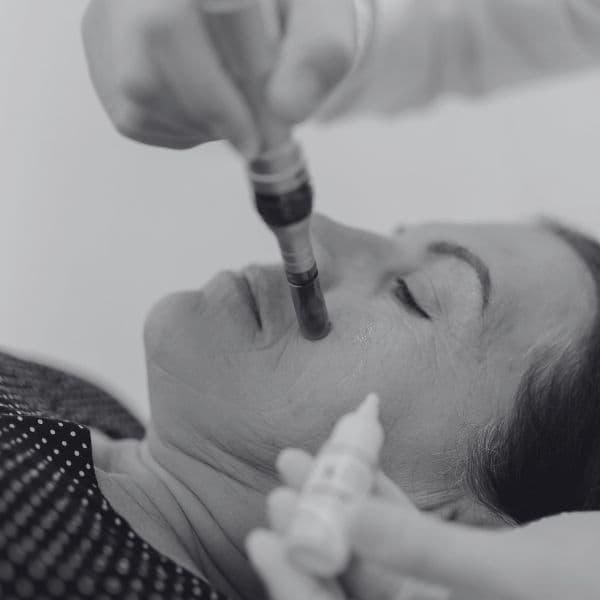

Masseter reduction softens a wide lower face and eases jaw tension, but only where the muscle is genuinely what is causing the width. If your jaw feels tight or looks square, an assessment will confirm whether this is your treatment. Dr Ellie Sateei sees patients at her London.
Our London clinic is located at 91a New Cavendish Street, London, W1W 6XF
We serve patients from London, Kent and the home counties as well as from all over the world. Our London clinic sits in the heart of Marylebone, within easy reach of the West End by tube, while our Sevenoaks clinic in Ightham is moments from the M25 and M26 for patients across Kent.