
A regenerative injectable using purified DNA fragments to signal genuine tissue repair, widely chosen for skin quality and the delicate under-eye area.
Plinest is one of the longest-established polynucleotide treatments in aesthetic medicine and remains among the most widely studied. Dr Ellie Sateei offers Plinest at her London and Sevenoaks clinics for patients wanting a regenerative approach to skin quality.
Because it acts as a repair signal rather than a volumising product, Plinest suits patients whose main concern is the condition of the skin itself.
Plinest is an injectable treatment containing highly purified polynucleotides, fragments of DNA prepared to a medical standard. Once introduced into the skin, they are recognised by the body as a signal to begin repair, prompting fibroblasts to become more active and supporting collagen production and local blood supply.
The range includes formulations for the face, the eye area and the scalp, each prepared at a concentration suited to the tissue being treated.
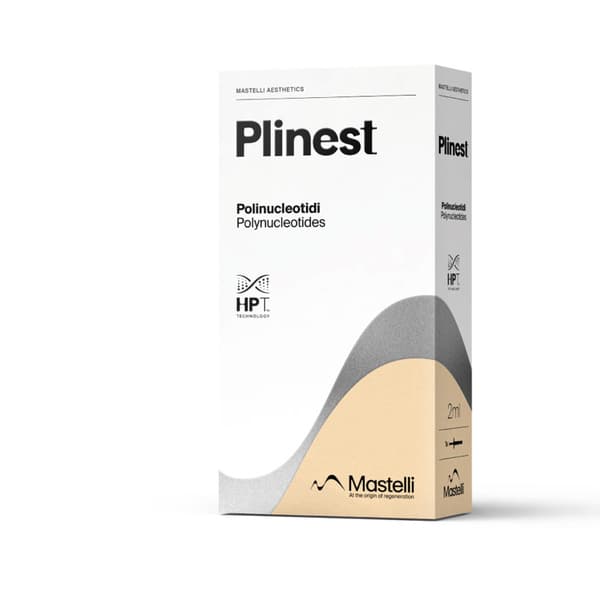
Plinest is commonly used to improve overall skin quality, addressing dullness, dehydration, fine lines and thin or fragile skin. It is frequently chosen for the under-eye area, where crepiness and dark circles caused by thin skin are a concern, and for scalp support where hair density is the goal.
Dr Sateei will assess your skin during consultation to determine whether Plinest is well suited to your concerns.
Treatment is delivered through a series of fine injections into the target area, and topical numbing can be used to improve comfort. Most patients describe mild discomfort during the procedure.
Small raised points are usually visible immediately after treatment and settle within a few hours. Some mild swelling or bruising is common for a day or two. A course of sessions, typically spaced two to four weeks apart, is recommended, with improvements building progressively over this period.
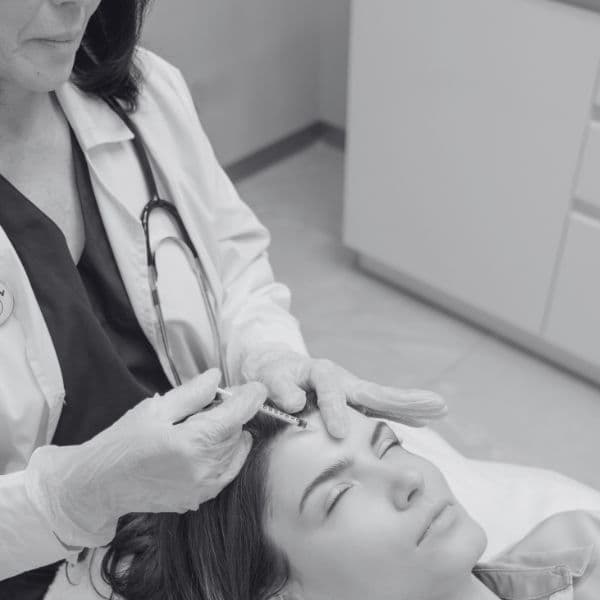
Dr Sateei favours polynucleotide treatments where the goal is genuine repair rather than volume, and her more than twenty years in dermatology and aesthetics inform careful judgement about placement, depth and course length, particularly in the delicate eye area.
Every course is tailored to your specific concerns following a thorough consultation, at both her London clinic near Harley Street and her Sevenoaks clinic in Kent.

Plinest is an injectable polynucleotide treatment using highly purified DNA fragments to signal and support the skin’s own repair processes.
It prompts the skin’s fibroblasts to become more active, supporting collagen production, hydration and local blood supply.
Common concerns include dullness, dehydration, fine lines, thin or fragile skin, under-eye crepiness and scalp support.
Most patients describe mild discomfort, and topical numbing can be used to improve comfort.
Small raised points are visible immediately and settle within a few hours, with mild swelling or bruising possible for a day or two.
A course of sessions, typically spaced two to four weeks apart, is recommended for the fullest result.
Improvements in skin quality build progressively across the course and continue afterwards.
Yes, it is one of the most common uses, as the mechanism suits thin, delicate skin.
Most adults wanting to improve skin quality and resilience are suitable candidates, confirmed following a skin assessment.
Yes, it is often used alongside skin boosters, micro-needling or toxin as part of a broader plan.
Plinest is one of several polynucleotide brands Dr Ellie Sateei uses, alongside Nucleofill and Rejuran, each of which has its own page. Nucleofill has a firmer, more tightening character; Rejuran is more focused on the skin barrier.
The full list of other polynucleotide brands used across the clinic is on the polynucleotides (PDRN) page.
Brands named above that have their own page, for linking: Polynucleotides (PDRN) (/brands/polynucleotides), Nucleofill (/brands/nucleofill), Rejuran (/brands/rejuran)
Plinest suits skin that is thin, tired or fragile rather than short of volume. These are the concerns Dr Ellie Sateei treats with it most often.



If you would like a regenerative approach to your skin’s quality and resilience, Dr Ellie Sateei welcomes a personal consultation at her London or Sevenoaks clinic.
Our London clinic is located at 91a New Cavendish Street, London, W1W 6XF
We serve patients from London, Kent and the home counties as well as from all over the world. Our London clinic sits in the heart of Marylebone, within easy reach of the West End by tube, while our Sevenoaks clinic in Ightham is moments from the M25 and M26 for patients across Kent.