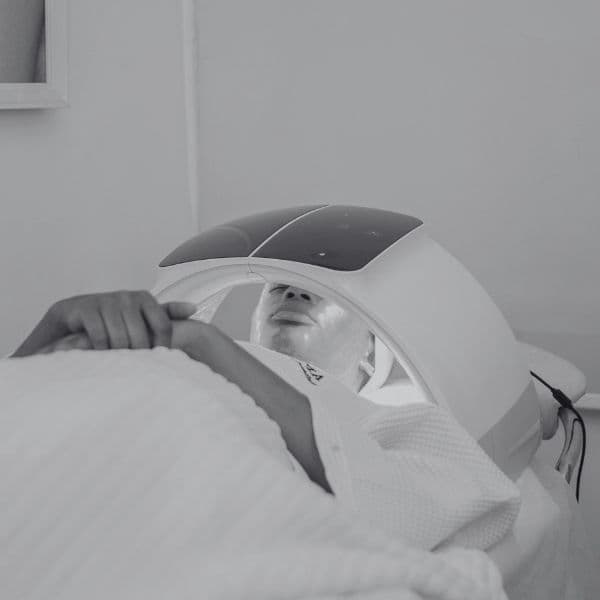
A peel is only as good as the match between its strength and what your skin can recover from. The strongest available is rarely the right one.


A peel applies a controlled solution to the skin to remove or loosen the outer layers, prompting fresh skin to emerge and, at greater depths, stimulating collagen beneath.
The word covers an enormous range. A lactic or mandelic acid peel is gentle enough for reactive skin and involves no visible flaking. A trichloroacetic acid peel works considerably deeper and involves several days of shedding. Both are peels, and the difference between them is not sophistication but suitability.
At Dr Ellie Sateei’s London and Sevenoaks clinics the peel is selected from a clinical assessment of your skin, its barrier function, its sensitivity and how much recovery you can accommodate. Results vary between individuals.

Different acids reach different depths and target different things. Salicylic acid is oil-soluble and works into the pore, which suits congestion and acne-prone skin. Glycolic and lactic acids work on the surface, improving texture and tone. Mandelic is gentler and better tolerated by reactive skin. Jessner and TCA reach deeper for more established texture and pigment change. Enzyme peels loosen the surface without acid at all. Retinol peels work over the following days rather than during the appointment.
Dr Sateei selects from that range rather than working through a fixed menu. Skin type, pigmentation risk, current skincare, recent treatment and how much downtime you can accommodate all narrow the choice before a bottle is opened.
Depth of peel is not a measure of quality. Aggression is frequently sold as efficacy in this category, and a peel too strong for the skin it is applied to produces inflammation, and in deeper skin tones a genuine risk of post-inflammatory pigmentation, which is a longer problem than the one being treated.
Peels for pigmentation need particular care. Melasma in particular can worsen with the wrong approach, and the skincare and photoprotection around the peel matters more than the peel itself.
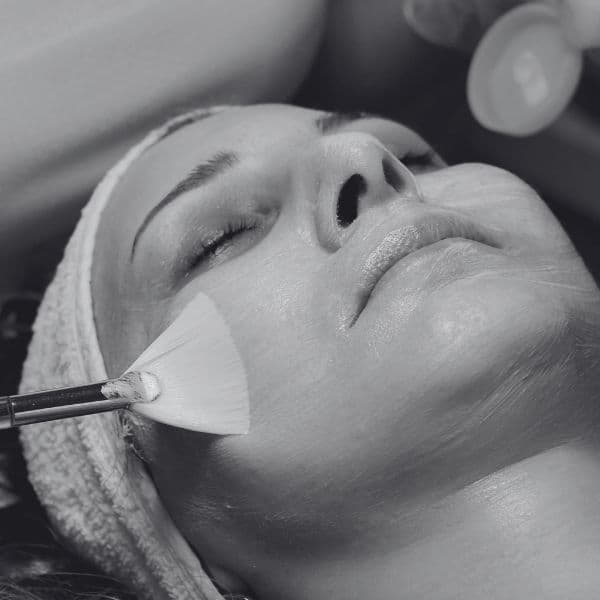
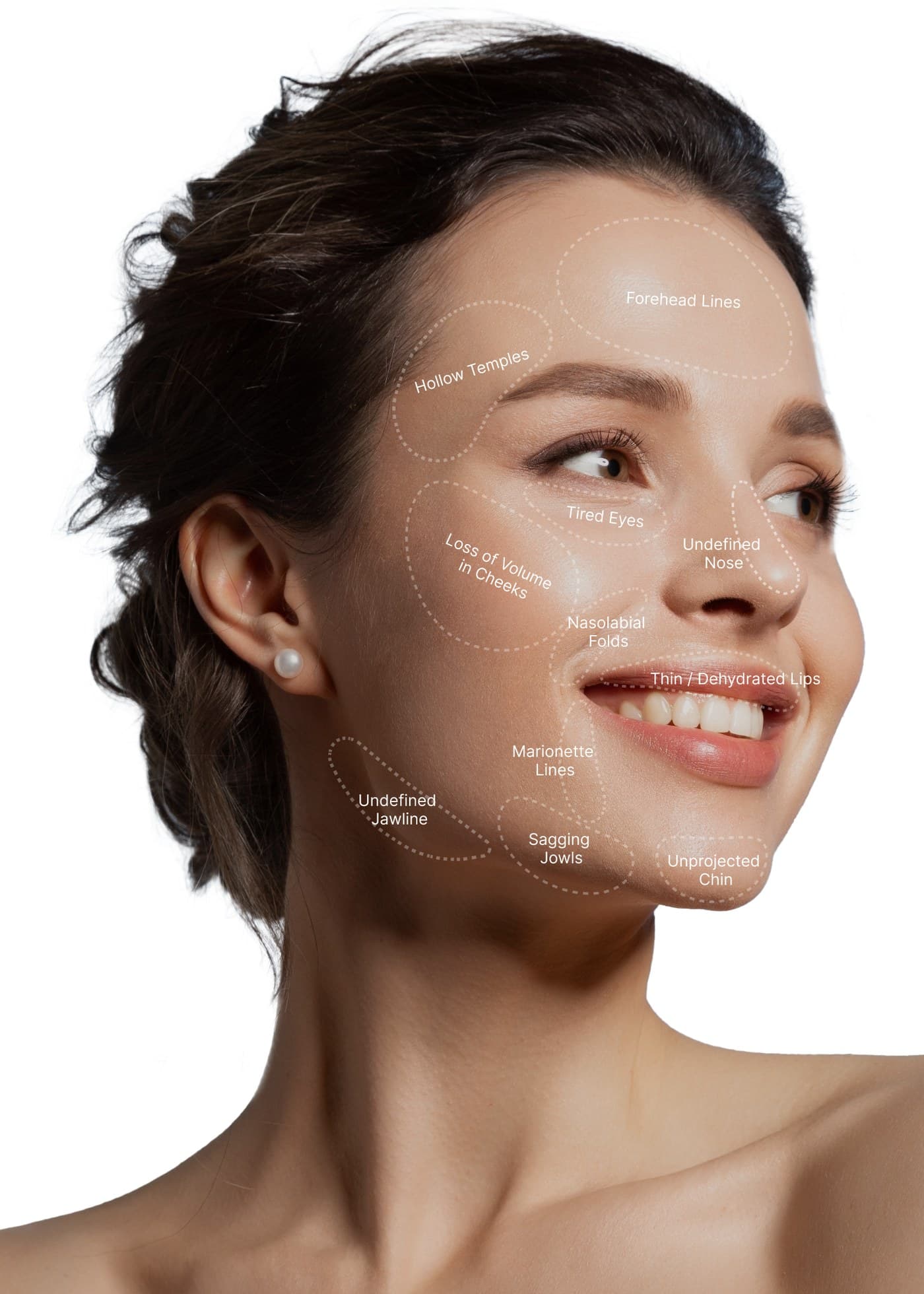
A peel may suit you if you are looking to:
They are not the right treatment for established textural scarring, which needs microneedling, or for structural change. Peels are avoided during pregnancy for certain acids, where the skin barrier is compromised, where there is active infection, and are approached with particular caution in deeper skin tones and in melasma.

The solution is applied to cleansed skin for a set period. Most patients describe a warming or tingling sensation that settles once it is removed or neutralised.
Downtime varies entirely with the peel. PRX-T33 involves no visible peeling and patients return to normal activity immediately. Superficial peels may involve slight flaking for a day or two. Deeper peels involve several days of visible shedding, and that timeline is set out clearly before you commit.
Sun protection afterwards is essential rather than advisable. Treated skin is temporarily more vulnerable to UV, and neglecting it is the most common reason a peel course underdelivers or causes pigmentation.
Peels are generally planned as a course of three to six, spaced according to depth, with maintenance afterwards.
| Treatment | London | Sevenoaks |
|---|---|---|
| PRX-T33, single session | From £175 | From £175 |
| PRX-T33, course of two | From £300 | From £300 |
New patient consultation, £195 at both clinics. If you go ahead with treatment on the day of your appointment, this fee is deducted from the cost of your treatment.
Prices correct as published and subject to change.
“There is a belief in this industry that a stronger peel is a better peel. It is not. A peel too aggressive for the skin it is applied to causes inflammation, and in darker skin tones it can cause pigmentation that lasts far longer than whatever we were treating. The right peel is the one your skin can recover from properly, and quite often that is a gentler one repeated than a strong one endured.”
Dr Ellie Sateei has over two decades of experience in dermatology and aesthetics.
From £175 for PRX-T33, with a course of two at £300. Pricing for other peel types is confirmed at consultation, which is £195 and deducted from treatment on the day.
That depends on your skin type, your concern, your pigmentation risk and how much downtime you can accommodate. It is decided at assessment rather than chosen from a list.
It depends entirely on depth. PRX-T33 involves no visible peeling. Superficial peels may flake slightly. Deeper peels involve several days of shedding, which is explained before you commit.
Cautiously, and as part of a wider plan. Melasma can worsen with the wrong approach, and the skincare and daily photoprotection around the peel matter more than the peel itself.
Generally a course of three to six, spaced according to depth, with maintenance afterwards.
With the right acid and depth, yes. The wrong choice carries a genuine risk of post-inflammatory pigmentation, which is why assessment matters more than strength.
Chemical peels are often planned alongside these.


The right peel is the one your skin can recover from, which is frequently not the strongest one available. If you are considering a peel, an assessment will establish which acid and depth suits your skin and how much downtime you would be accepting.
Our London clinic is located at 91a New Cavendish Street, London, W1W 6XF
We serve patients from London, Kent and the home counties as well as from all over the world. Our London clinic sits in the heart of Marylebone, within easy reach of the West End by tube, while our Sevenoaks clinic in Ightham is moments from the M25 and M26 for patients across Kent.