
A written plan built around your skin, your concern and what you will realistically maintain, prescribed following assessment and reviewed rather than issued once.


Most people arrive with a shelf rather than a routine. Eight or nine products bought at different times for different reasons, several of which are working against each other, and no clear sense of which of them is responsible for anything.
A bespoke skincare prescription replaces that with a plan. Your skin is assessed clinically, everything you currently use is reviewed, and you leave with a written routine setting out what to apply, when, in what order, and what each item is there to do. Where prescription-strength products are appropriate they are prescribed at that appointment, following the face-to-face consultation the law requires.
The plan is built around three things: what your skin actually needs, which concern you most want addressed, and what you will realistically keep doing. The third matters more than patients expect, because a routine abandoned in week three achieves nothing regardless of how good it was.
At Dr Ellie Sateei’s London clinic plans are usually shorter than the ones they replace. Results vary between individuals and build over months.
Three principles decide what goes into it.
Sequence rather than volume. The most common reason a routine fails is that too much was started at once, the skin became irritated, and the patient abandoned all of it including the parts that were working. Actives are introduced one at a time, at a frequency your skin tolerates, and built up deliberately.
Strength matched to tolerance. Prescription tretinoin is already in its active form, which makes it considerably more effective than over-the-counter retinol and considerably more likely to irritate if introduced badly. Almost everyone who says they cannot tolerate a retinoid was started too high, too often, by somebody who did not follow up. Starting low and twice weekly works for the great majority.
A review date rather than a repeat prescription. Prescription-strength pigment inhibitors are effective and are not products for indefinite unsupervised use. A defined course and a review are part of the treatment, not an upsell, and the plan is adjusted at eight to twelve weeks according to how your skin has responded.
Broad-spectrum sunscreen sits underneath all of it. It is the single most evidence-backed intervention available and it protects the result of every other treatment. Pigmentation treated without daily photoprotection returns, reliably, and no prescription changes that.

It may suit you if you are looking to:
It may not be the right appointment if you are looking for a product recommendation rather than an assessment, or if what you want is a shorter route to a result that skincare cannot deliver on its own, in which case Dr Sateei will tell you what would and would not help.
Prescription products are not suitable during pregnancy or breastfeeding. Tretinoin in particular is contraindicated, so tell Dr Sateei if you are pregnant, planning pregnancy or breastfeeding so your plan can be adjusted.

Your consultation includes a clinical skin assessment, a review of everything you currently use, a discussion of what you want addressed and what you will maintain, and a written plan. Where prescription products are appropriate they are prescribed at that appointment.
Retinoids commonly cause dryness, flaking or mild irritation in the first four to six weeks. That is expected, it is managed by adjusting frequency rather than by stopping, and it is the main reason supervision helps.
Hydration and comfort usually improve within two to four weeks. Texture and clarity typically improve over eight to twelve weeks. Pigmentation is slower again, often three to six months of consistent use. A review at eight to twelve weeks assesses the response and adjusts the plan, and plans are frequently reduced at that appointment rather than added to. Results vary between individuals.
| Treatment | London | Sevenoaks |
|---|---|---|
| Skincare consultation | £195 | £195 |
| Written plan and prescription | Confirmed at consultation | Confirmed at consultation |
New patient consultation, £195 at both clinics. If you go ahead with treatment on the day of your appointment, this fee is deducted from the cost of your treatment.
Prices correct as published and subject to change.
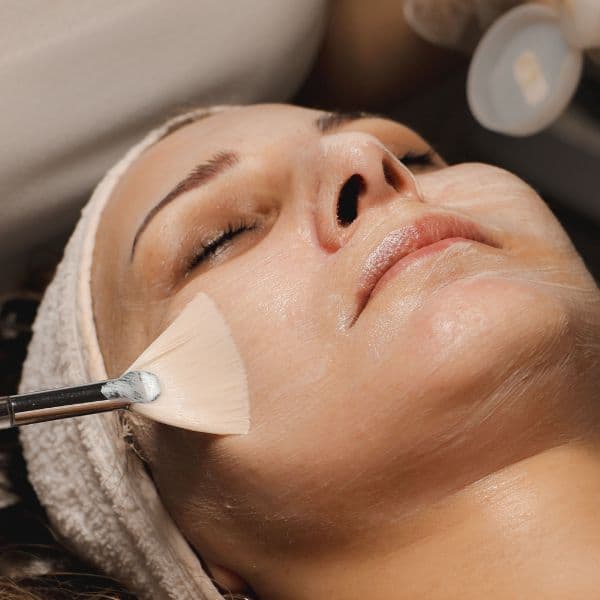
“People bring me a bag of products and expect me to add to it. Most of the time I take things out. Skincare is the least exciting conversation in the room and it does more for most patients than anything I inject, and it costs a fraction of a course of treatments. What I am really prescribing is a sequence and a review date, because the products are not the difficult part. Keeping going through week three, when your skin is flaking and you have decided it is not working, is the difficult part.”
Dr Ellie Sateei has over two decades of experience in dermatology and aesthetics.
A clinical assessment of your skin, a review of everything you currently use, and a written plan setting out what to apply, when and in what order. Prescription products are prescribed at that appointment where appropriate.
Yes. Prescription products require a face-to-face consultation, as the law requires. The consultation is £195 and is deducted from treatment on the day.
It depends on what your plan includes, and it is confirmed at your consultation. Plans are frequently smaller and less expensive than the routines they replace.
Usually the opposite. Actives are introduced one at a time, and the most common reason a routine fails is that too much was started at once.
Hydration and comfort in two to four weeks, texture and clarity over eight to twelve weeks, pigmentation often three to six months. Results vary between individuals.
Your skin is reassessed at eight to twelve weeks and the plan is adjusted, which frequently means reducing it rather than adding to it.
Treatments of interest to book alongside bespoke skincare prescription


A prescribed plan is the least glamorous and best-evidenced thing available for your skin, and it needs an assessment rather than a website. If your routine has accumulated rather than been chosen, or if a retinoid has defeated you before, that is where to start. Dr Ellie Sateei sees patients at her London and Sevenoaks clinics.
Our London clinic is located at 91a New Cavendish Street, London, W1W 6XF
We serve patients from London, Kent and the home counties as well as from all over the world. Our London clinic sits in the heart of Marylebone, within easy reach of the West End by tube, while our Sevenoaks clinic in Ightham is moments from the M25 and M26 for patients across Kent.